Arrae Health: Primary Care Physician | Senior Health Services in Corona & Palm Springs

17 Jul, 2026
Diabetes and Summer Heat: How High Temperatures Affect Your Blood Sugar
In Palm Springs and across the Inland Empire, July temperatures regularly climb past 110°F. For most people, that means staying cool and drinking plenty of water. But for the more than 40 million Americans living with diabetes, summer heat is a genuine medical concern, not just a discomfort to push through.
High temperatures affect how your body uses insulin, how well your medications work, how quickly you become dehydrated, and how effectively your body cools itself. All of these factors can combine to cause dangerous, sometimes rapid, swings in blood sugar. Below, we’ll walk through exactly what heat does to blood sugar, the warning signs every diabetic should know, and how to protect yourself through the hottest months of the year.
Why Heat Affects People With Diabetes More Than Others
The CDC is direct about this: heat affects people with diabetes more than the general population, and the reasons are physiological, not just a matter of feeling more uncomfortable in the sun.
Over time, diabetes can damage blood vessels and nerves throughout the body, including the nerves that control sweat glands. When those nerves are affected, the body’s sweating response becomes impaired, which means it can’t cool itself as effectively. This raises the risk of heat exhaustion and heat stroke considerably. Research also shows that people with poorly controlled blood sugar tend to have even more severely impaired sweating than those with well-managed diabetes.
On top of that, diabetes-related cardiovascular damage can reduce the body’s ability to redistribute heat through circulation, adding another layer of risk. The key takeaway is simple: what feels like ordinary summer discomfort for a healthy adult can quickly become a medical emergency for someone living with diabetes.
How Summer Heat Directly Affects Blood Sugar Levels
Heat Can Cause Blood Sugar to Rise (Hyperglycemia)
Extreme heat activates the body’s stress response, releasing cortisol and adrenaline. In response, the liver releases stored glucose into the bloodstream, and blood sugar rises. Dehydration makes this worse. With less fluid circulating in the bloodstream, glucose becomes more concentrated, pushing blood sugar even higher.
This creates a cycle that’s difficult to break on your own: high blood sugar leads to more frequent urination, which causes more fluid loss, which leads to further dehydration, which drives blood sugar even higher. In severe cases, this dehydration-hyperglycemia cycle can progress to diabetic ketoacidosis (DKA), a life-threatening emergency that requires immediate medical attention.
Heat Can Also Cause Blood Sugar to Drop (Hypoglycemia)
At the same time, heat causes blood vessels to dilate, a process called vasodilation. This speeds up how quickly insulin is absorbed from an injection site. If you’ve administered insulin before heading outdoors, the heat may cause it to absorb faster than expected, sometimes leading to a sudden drop in blood sugar.
Physical activity in hot weather amplifies this effect even further. Exercise combined with heat significantly raises the risk of hypoglycemia. Sunburn adds yet another variable: the physical stress of a sunburn can raise blood sugar unpredictably, which makes managing levels during outdoor summer activities especially tricky.
| Heat Effect | Impact on Blood Sugar |
| Stress hormones (cortisol, adrenaline) released | Blood sugar rises (hyperglycemia) |
| Dehydration concentrates glucose in the blood | Blood sugar rises |
| Vasodilation speeds insulin absorption | Blood sugar drops (hypoglycemia) |
| Sunburn triggers a body stress response | Blood sugar rises unpredictably |
| Physical activity in heat | Can cause unexpected drops or spikes |
Managing diabetes in summer heat requires more than willpower. It requires a personalized plan. The team at Arrae Health in Palm Springs, Corona, and Riverside provides comprehensive diabetes evaluation and management to help keep your blood sugar safe all summer long. [Book Your Appointment]
Diabetes Sweating: What’s Normal and What’s a Warning Sign
Abnormal sweating is one of the most common, and most confusing, summer symptoms diabetics experience. Sweating too much can signal hypoglycemia, since low blood sugar triggers a fight-or-flight response that releases adrenaline and causes heavy sweating. Sweating too little, on the other hand, can point to diabetic neuropathy, which is nerve damage to the sweat glands caused by long-term high blood sugar. People who sweat too little are actually at the highest risk of heat exhaustion and heat stroke in summer, since their bodies can’t cool themselves properly.
Night sweats are another pattern worth watching. In diabetics, they’re often caused by nocturnal hypoglycemia, meaning blood sugar drops while sleeping. The bottom line is that any noticeable change in your sweating pattern during the summer months is a signal to check your blood sugar and reach out to your provider.
Signs of Heat Exhaustion in People With Diabetes: Don’t Ignore These
Early Warning Signs (Heat Exhaustion):
- Heavy sweating, or conversely, a lack of sweating
- Cold, clammy skin
- Dizziness or lightheadedness
- Nausea or vomiting
- Muscle cramps
- Headache
- Rapid heartbeat
- Extreme fatigue or weakness
- Fainting
Escalating Emergency Signs (Heat Stroke, Call 911):
- Hot, dry skin (sweating stops entirely)
- Confusion or disorientation
- Severe headache
- Rapid pulse
- Loss of consciousness or seizures
If you or someone you know shows any of the heat stroke warning signs above, treat it as a medical emergency and call 911 right away.
How to Safely Manage Your Diabetes in Summer Heat
- Stay Hydrated, Consistently
Drink water steadily throughout the day rather than waiting until you’re thirsty. Avoid sugary beverages, since they spike blood sugar and worsen dehydration at the same time. It’s also wise to limit alcohol, which acts as a diuretic and increases fluid loss. For extended time outdoors, a low-calorie electrolyte drink can help maintain balance.
- Check Your Blood Sugar More Frequently
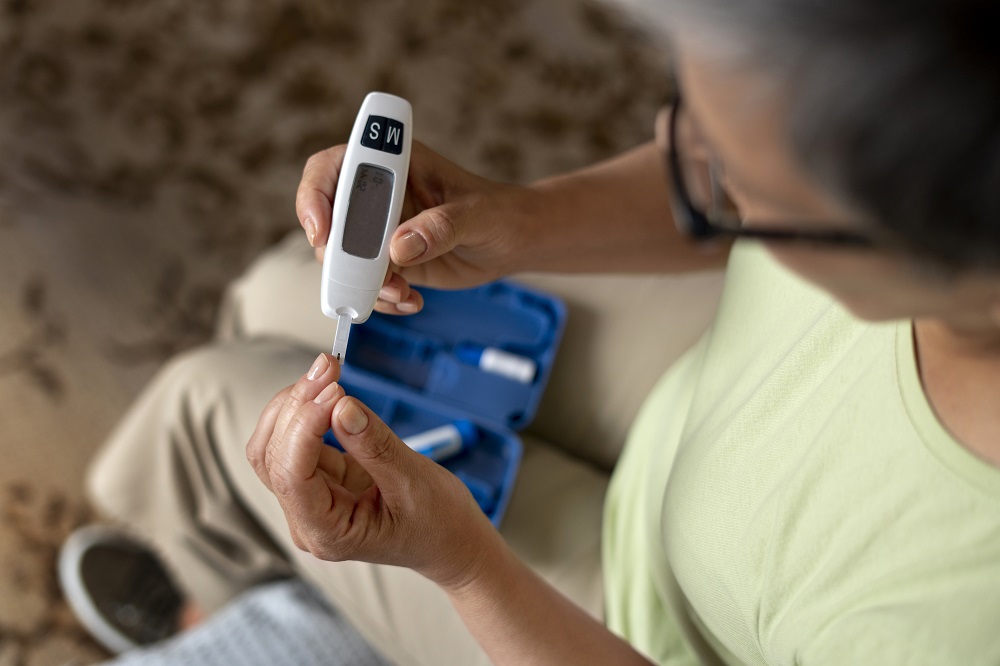
Heat can cause blood sugar to fluctuate more than usual, which means your normal testing schedule may not be enough during a Southern California July. Check your levels before and after any time spent outdoors. It’s also worth noting that lotion, sunscreen, and sweat on the skin can interfere with continuous glucose monitor (CGM) readings, so it’s a good idea to wipe the area clean before doing a finger-stick test.
- Protect Your Insulin and Medications From Heat
Never leave insulin in a hot car, since heat degrades it and reduces its effectiveness. Unopened insulin should be kept refrigerated, generally between 36 and 46°F. Insulin that’s currently in use can typically be stored at room temperature, but if ambient temperatures rise above 77°F, it should be moved to a cooler bag. Oral diabetes medications can be affected by heat too, so it’s worth checking the storage instructions on each of your prescriptions.
- Adjust Your Activity Timing
Try to avoid outdoor exercise during peak heat hours, roughly 10am to 4pm. When possible, move workouts indoors to an air-conditioned space. If you do exercise outside, check your blood sugar before, during, and after. It’s also a good idea to talk with your provider about adjusting insulin dosing ahead of any planned physical activity in the heat.
- Dress for the Heat
Choose loose, light-colored, moisture-wicking clothing. Apply a broad-spectrum sunscreen with SPF 30 or higher, since sunburn can trigger a stress response that raises blood sugar unpredictably. Proper footwear matters too. Heat increases the risk of foot injuries, and wounds tend to heal more slowly in people with diabetes.
- Keep Supplies and Snacks Ready
Always carry a fast-acting carbohydrate snack, like glucose tablets or juice, to treat hypoglycemia if it happens. If glucagon or nasal glucagon has been prescribed to you, keep it accessible. Store all your diabetes supplies in an insulated bag, away from direct sunlight.
- Know When to Go Indoors
Once the heat index climbs above 80°F at 40% humidity, outdoor heat risk begins escalating quickly for people with diabetes. Palm Springs routinely exceeds this threshold throughout July, so outdoor time should be planned carefully around cooler parts of the day. If you’re adjusting medications for summer, our [medication review and management] service can help you fine-tune your routine safely.
Is summer heat making your blood sugar harder to control? Don’t wait for a crisis. Arrae Health offers personalized diabetes management with medication adjustments, monitoring guidance, and follow-up care across Palm Springs, Corona, and Riverside. [Schedule a Visit]
Special Considerations if You’re on Insulin or Blood Pressure Medications
For insulin users, the vasodilation caused by heat speeds up absorption, which raises the risk of hypoglycemia. It’s worth having a conversation with your provider about summer dose adjustments before the hottest weeks arrive. Diuretics, commonly prescribed as water pills for blood pressure, are also worth flagging, since they’re frequently used in diabetic patients who also have hypertension and can meaningfully increase dehydration risk in summer.
Other oral diabetes medications may work differently in heat or high humidity, so it’s always worth reviewing summer storage and effectiveness directly with your provider. It’s also important to recognize that many people with diabetes also manage high blood pressure, and having both conditions together significantly raises overall heat-related risk. Our [high blood pressure management] and [cardiac evaluation] services are both available if you’re managing multiple conditions this summer.
When to See a Doctor About Diabetes in the Summer
Reach out to your provider if any of the following apply to you:
- Your blood sugar readings are consistently elevated or erratic despite following your usual routine
- You’re noticing unusual sweating patterns, either too much or too little
- Signs of heat exhaustion appear, or keep recurring
- Your insulin or medication seems less effective than it normally does
- You haven’t had a wellness check this year, and summer is a high-risk season for diabetic complications
An [annual wellness visit] is a great starting point if it’s been a while since your last checkup.
Comprehensive Diabetes Care at Arrae Health, Palm Springs, Corona, and Riverside
Arrae Health offers comprehensive metabolic panels, personalized insulin and oral-agent regimens, and blood sugar monitoring designed around real-world summer conditions, not just a generic care plan. We serve patients across Palm Springs, Corona, and Riverside, in one of the hottest climates in the country, which means our approach to diabetes management already accounts for the extra risks that come with extreme heat.
Now is the time to establish or update your summer diabetes management plan, before temperatures peak even further.
Summer in the desert is beautiful, and it’s manageable with the right care. Book your diabetes appointment at Arrae Health and get a personalized summer blood sugar management plan. [Book Now]
Conclusion
Summer heat in Palm Springs, Corona, and Riverside isn’t just an inconvenience for people with diabetes. It’s a genuine safety concern that can push blood sugar in either direction, sometimes quickly and without much warning. Between impaired sweating, faster insulin absorption, dehydration, and medication storage challenges, there’s a lot to keep track of once temperatures climb past 100°F.
The good news is that nearly all of these risks are manageable with the right preparation and the right care team behind you. At Arrae Health, we work with patients across Palm Springs, Corona, and Riverside to build diabetes management plans that actually account for our region’s extreme summer heat. If it’s been a while since your last checkup, or if this summer’s temperatures have already made your blood sugar harder to control, don’t wait for a crisis to reach out. Schedule your diabetes evaluation today and head into the hottest months of the year with a plan that’s built for the desert.
FAQs
Q1. Does hot weather raise or lower blood sugar in diabetes?
Ans: Hot weather can do both. Heat triggers stress hormones that raise blood sugar, while dehydration concentrates glucose in the blood, leading to hyperglycemia. At the same time, heat causes blood vessels to dilate, speeding up insulin absorption and potentially causing hypoglycemia, especially after exercise.
Q2. Why does heat affect people with diabetes more?
Ans: Diabetes causes damage to blood vessels and nerves over time, including the nerves controlling sweat glands. This impairs the body’s ability to cool itself through sweating, making people with diabetes significantly more vulnerable to heat exhaustion and heat stroke than those without the condition.
Q3. Can dehydration cause high blood sugar in diabetes?
Ans: Yes. When you’re dehydrated, there’s less fluid in the bloodstream, causing glucose to become more concentrated and leading to hyperglycemia. High blood sugar then causes more frequent urination, which leads to further dehydration, creating a difficult cycle to break. In severe cases, this can progress to diabetic ketoacidosis (DKA).
Q4. Why do diabetics sweat so much, or sometimes not at all?
Ans: Excessive sweating in diabetics often signals low blood sugar, since hypoglycemia triggers the body’s fight-or-flight response and causes heavy sweating. On the other hand, some diabetics sweat too little due to diabetic neuropathy, which is nerve damage to the sweat glands from long-term high blood sugar. Both patterns are worth mentioning to your doctor.
Q5. Does sweating lower blood sugar?
Ans: Sweating itself doesn’t directly lower blood sugar. However, the physical exertion that causes sweating, such as exercise, does reduce blood sugar by increasing glucose uptake. Heavy sweating without adequate hydration can actually raise blood sugar by concentrating glucose in the bloodstream.
Q6. How should I store insulin during summer heat?
Ans: Insulin currently in use can generally be stored at room temperature for a limited number of days depending on the type, but once ambient temperatures exceed 77°F, it should be kept in a cool bag or refrigerator. Never leave insulin in a hot car or in direct sunlight, since heat degrades it and reduces its effectiveness.
Q7. What are the signs of heat exhaustion in someone with diabetes?
Ans: Signs include heavy sweating, or an absence of sweating, cold or clammy skin, dizziness, nausea, muscle cramps, rapid heartbeat, headache, extreme fatigue, and fainting. If symptoms progress to hot dry skin, confusion, severe headache, rapid pulse, or loss of consciousness, that’s heat stroke, a medical emergency requiring an immediate call to 911.
Q8. Can sunburn affect blood sugar levels in diabetes?
Ans: Yes. Sunburn creates physical stress on the body, which triggers the release of stress hormones that raise blood sugar levels. People with diabetes should apply broad-spectrum SPF 30+ sunscreen and avoid prolonged sun exposure, particularly during peak hours.
Q9. How often should I check my blood sugar in summer?
Ans: More often than usual. Heat and physical activity can cause blood sugar to fluctuate significantly during the summer months. Check before and after outdoor activities, whenever you notice symptoms of high or low blood sugar, and any time your usual routine changes. Talk with your provider about the right monitoring frequency for your specific regimen.
Q10. Does Arrae Health help with diabetes management in Palm Springs and Corona?
Ans: Yes. Arrae Health provides comprehensive diabetes evaluation and management, including metabolic panels, personalized insulin and oral-agent regimens, blood glucose monitoring guidance, and follow-up care, across its Palm Springs, Corona, and Riverside locations. Summer is an ideal time to schedule a diabetes checkup given the elevated heat-related risks in Southern California.